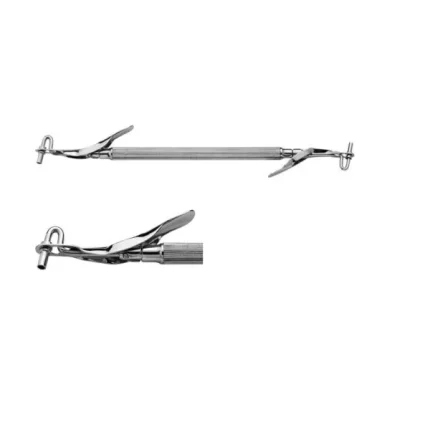
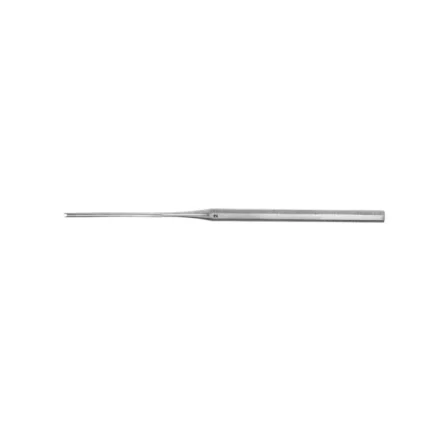
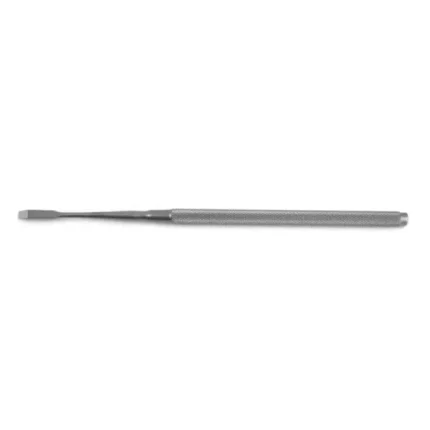
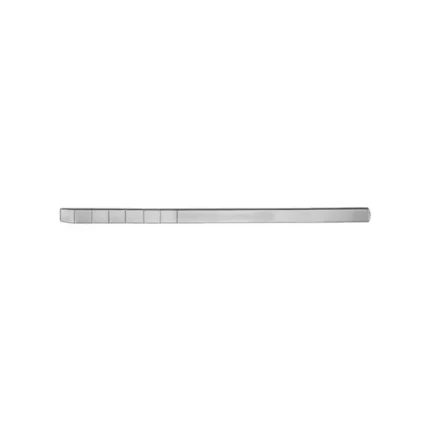
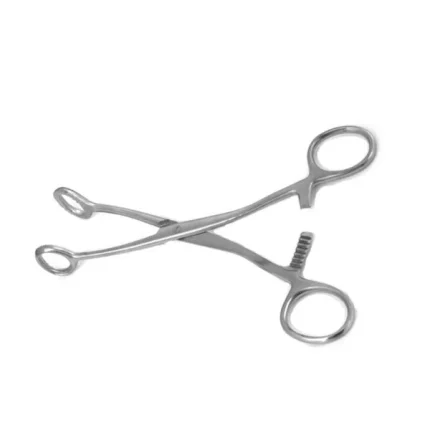
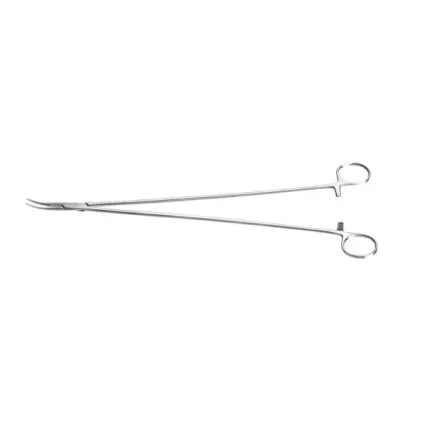
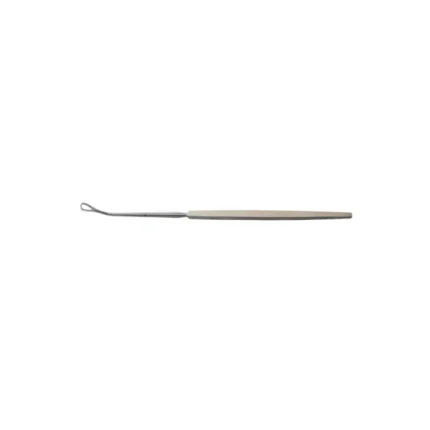
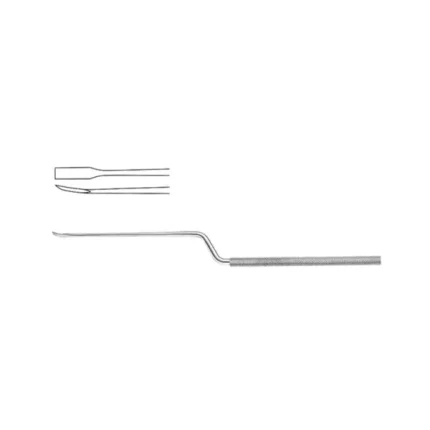
Goldmann Septum Displacer
The Goldmann Septum Displacer (ASI-8193) is a precision-engineered surgical instrument. It is designed specifically for Ear, Nose, and Throat (ENT) surgical procedures. Surgeons rely on this tool during delicate nasal and septal operations. It allows medical professionals to manipulate and re-position cartilage or tissue safely.
Crafted from high-grade German stainless steel, it guarantees superior durability and longevity. It easily withstands rigorous daily hospital use and frequent sterilization cycles. The instrument features a non-reflective, dull matte finish. This specialized surface prevents glare under bright operating room lighting, enhancing surgeon visibility.
Manufactured by Aero surgical Instruments in Sialkot, Pakistan, it adheres to international standards of craftsmanship. The ergonomic design reduces hand fatigue during extended procedures. It balances control with delicate force application. This tool is an essential addition to any surgical tray.
Advanced Engineering & Structural Design
The Goldmann Septum Displacer (ASI-8193) is specifically engineered to meet the demanding requirements of modern rhinology and septoplasty procedures. Crafted from surgical-grade German stainless steel, this instrument provides exceptional mechanical strength while maintaining a fine, highly responsive tip profile. This superior structural integrity ensures that the instrument withstands the firm resistance of cartilage and thick bony junctions without flexing or bending under load. Consequently, surgeons achieve accurate vector control and force transmission during critical reconstructive phases.
The physical ergonomics of the handle are meticulously calibrated for optimal hand placement. A balanced weight distribution prevents hand fatigue during lengthier surgical cases, allowing for continuous precision and refined tactile feedback. Furthermore, the shaft length and taper are optimized to afford an unobstructed view down narrow nasal corridors. This spatial efficiency minimizes the risk of incidental mucosa tearing along adjacent anatomical structures.
Optical Clarity & Surface Technology
A defining feature of the ASI-8193 is its anti-glare finish. The surface undergoes a specialized passivation process that produces a non-reflective, dull matte texture. In modern operating rooms equipped with bright overhead LEDs and high-definition endoscopic cameras, standard mirror-finish tools cause distracting light reflections and glare. The matte coating absorbs extraneous light glare, protecting the surgical team from optical strain and preserving clear visibility of delicate tissue planes.
Additionally, this protective surface coating enhances the steel’s natural resistance to pitting, staining, and chemical corrosion. The instrument tolerates repeated exposure to heavy cleaning agents, ultrasonic baths, and high-temperature steam sterilization cycles without degrading the finish. The seamless joint and smooth surface contours prevent the accumulation of organic debris, streamlining post-operative decontamination and extending the service life of the tool across high-volume hospital environments.
Frequently Asked Questions (FAQs):
-
What is the primary function of the ASI-8193?
It is designed to displace, maneuver, and align nasal septal tissues during surgical procedures.
-
Which medical specialty uses this instrument?
It is primarily used by otolaryngologists and plastic surgeons conducting ENT operations.
-
What material is used to construct this tool?
The displacer is made from premium German steel.
-
What type of surface finishing does it feature?
It comes with a dull matte finish.
-
Why is a dull matte finish important in surgery?
It eliminates harsh reflections and glare under intense light sources.
-
Who manufactures the Goldmann Septum Displacer?
It is manufactured by Aero surgical Instruments.
-
Where is this product produced?
The instrument is crafted in Sialkot, Pakistan.
-
Is this instrument reusable?
Yes, it is designed for repeated surgical use after proper cleaning.
-
How should the ASI-8193 be sterilized?
It can be sterilized using standard hospital autoclaving protocols.
-
Does the steel resist rust and corrosion?
Yes, German stainless steel offers high resistance to corrosion and wear.
-
Under which category does this item fall?
It is listed under ENT Instruments, specifically within Elevators & Dissectors.
-
Is the handle designed for ergonomic grip?
Yes, it is shaped to offer max control and minimize hand fatigue.
-
Is this item sold individually?
Yes, it is available as an individual surgical unit.
-
What product code is assigned to this tool?
The official item code is ASI-8193.
-
Does it assist in septoplasty procedures?
Yes, it is well-suited for septoplasty and rhinoplasty interventions.
-
Can it handle firm cartilage manipulation?
The high-tensile steel provides enough strength for cartilage repositioning without bending.
-
Is it suitable for pediatric or adult ENT cases?
It is primarily sized for standard adult nasal procedures.
-
How does this tool help improve surgical safety?
Its smooth contouring prevents unintentional tissue trauma.
-
Does the matte finish degrade after autoclaving?
No, the matte coating remains intact through regular high-heat sterilization.
-
Is the product certified for hospital supply chains?
Yes, it complies with medical device standards set by Aero surgical Instruments.