


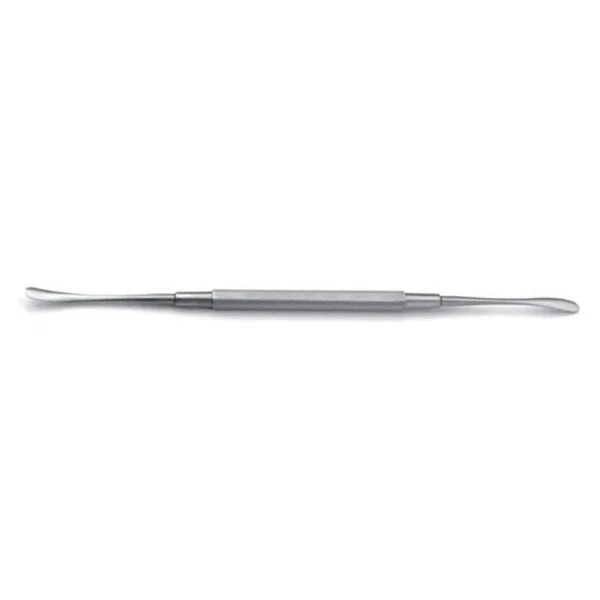
FREER-Elevator ENT
The ASI-8191 Freer Elevator is an essential instrument designed specifically for ENT procedures. Surgeons rely on it for accurate tissue elevation and precise periosteal lifting. It works exceptionally well in septoplasty, rhinoplasty, and sinus reconstructive surgeries. The tool features a double-ended design with flat, slightly curved blades. This dual design allows rapid transitions between functions without switching instruments. A central knurled handle delivers a reliable, non-slip grip.
This surface ensures maximum control and accuracy during delicate surgical maneuvers. Crafted from high-grade German stainless steel, this elevator offers long-lasting durability. It is highly resistant to corrosion and stands up well to daily use. A smooth matte finish prevents reflection under intense lighting. The instrument withstands repeated autoclave sterilization cycles effortlessly. Manufactured in Sialkot, Pakistan by Aero surgical Instruments, quality comes standard.
Upgrade your surgical kit with a reliable, multi-use elevator today. It combines comfort, precision, and endurance into a single essential tool.
Enhanced Key Features & Clinical Advantages
-
Dual-Ended Versatility: Designed with a dual-ended configuration featuring two distinct, fine, slightly curved blades. This allows surgeons to smoothly transition between delicate elevation, tissue retraction, and precise membrane dissection without the need to switch instruments during critical surgical steps.
-
Surgical-Grade German Stainless Steel Construction: Forged from premium German stainless steel, the ASI-8191 offers exceptional tensile strength, rigidity, and resistance to wear. The high metallic density ensures long-term structural integrity without bending or degrading under pressure.
-
Anti-Glare Satin Matte Finish: Finished with a non-reflective, dull matte coating that minimizes harsh glare and light reflections from bright operating room overhead lamps and endoscopic light sources, maintaining an unobstructed field of vision.
-
Ergonomically Knurled Central Handle: The midsection features an advanced cross-hatched knurled texture that provides a tactile, non-slip grip. This handle design maximizes control during delicate maneuvers, reduces hand strain during lengthy procedures, and maintains stability even when working with wet surgical gloves.
-
Atraumatic Blade Design: The slightly curved, smooth-edged tips are engineered to elevate mucoperichondrial and mucoperiosteal flaps cleanly. The blunted edges help prevent accidental tearing, perforation, or scuffing of delicate nasal and sinus tissues.
-
Full Autoclave & Sterilization Compatibility: Highly resistant to corrosion, rust, and chemical staining, allowing it to withstand repeated high-temperature steam autoclaving and standard hospital decontamination protocols without degrading performance.
-
Multi-Disciplinary Surgical Application: While optimized for ENT procedures—such as septoplasty, rhinoplasty, and sinus reconstructive surgeries—it is equally suitable for maxillofacial, oral, and minor orthopedic procedures requiring delicate periosteal stripping and tissue separation.
-
Precision-Crafted Quality Assurance: Manufactured in Sialkot, Pakistan by Aero surgical Instruments under strict quality management standards, ensuring consistent dimensions, smooth craftsmanship, and reliable performance across demanding clinical settings.
Frequently Asked Questions (FAQs):
-
What is the primary use of the ASI-8191 Freer Elevator? It is designed for elevating tissues, lifting the periosteum, and dissecting fine nasal membranes.
-
Which surgical specialties commonly use this tool? ENT surgeons frequently use it in nasal, sinus, and septal procedures.
-
What makes the double-ended design advantageous? It allows quick transitions between elevation and dissection tasks without changing tools.
-
What shape are the functional ends of the elevator? The blades are flat and slightly curved for accurate, gentle tissue separation.
-
How does the handle design improve grip? The central handle features a knurled texture to prevent slipping during operations.
-
What material is used to manufacture the ASI-8191? It is made from high-quality German stainless steel for strength and longevity.
-
What type of surface finishing does this instrument have? It features a dull, matte finish to minimize glare under operating room lamps.
-
Where is this surgical instrument manufactured? It is produced by Aerosurgical Instruments in Sialkot, Pakistan.
-
Is the ASI-8191 Freer Elevator reusable? Yes, it is fully reusable and built to endure frequent sterilization cycles.
-
How should this instrument be sterilized? It can be safely processed in standard steam autoclaves.
-
Is this tool suitable for septoplasty operations? Yes, it is ideal for elevating the mucoperichondrial flap during septoplasty.
-
Can it be used in rhinoplasty procedures? Yes, surgeons frequently use it to lift nasal skin and periosteum cleanly.
-
Does the stainless steel resist rust and corrosion? Yes, the high-grade steel provides superior protection against corrosion and staining.
-
How does the knurled handle assist during delicate maneuvers? It provides tactile control, allowing precise movements without hand fatigue.
-
Are both ends of the instrument identical in shape? Both tips feature curved blades designed for effective dual-ended functionality.
-
Why is a matte finish preferred over a polished mirror finish? Matte surfaces reduce light reflection, keeping the surgeon’s line of sight clear.
-
What is the product item code for this elevator? The official model identifier is ASI-8191.
-
Can this instrument be used in pediatric ENT surgeries? Yes, its fine tips allow for precise control in tight nasal passages.
-
How does this elevator protect delicate patient tissues? Slightly curved, smooth edges prevent accidental tears or perforations during elevation.
-
Is this product covered by surgical instrument quality standards? Yes, it is manufactured from medical-grade steel meeting international surgical equipment standards.


