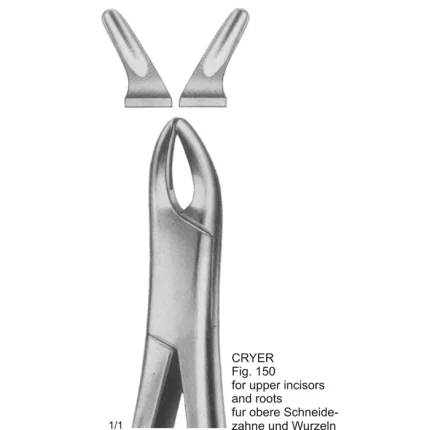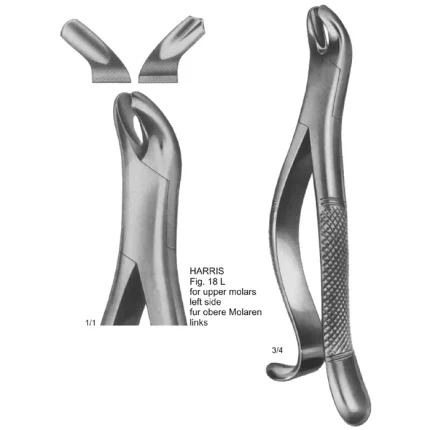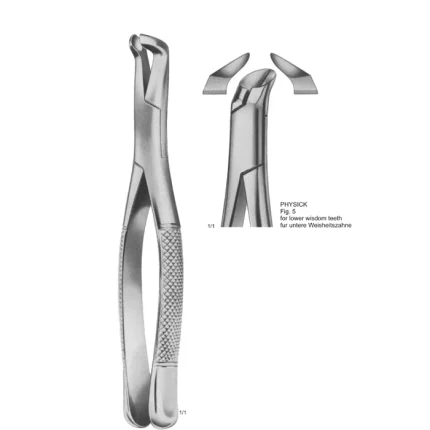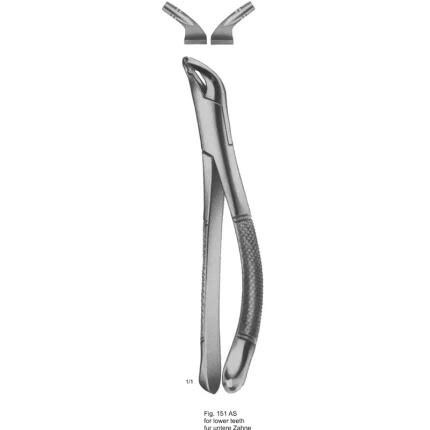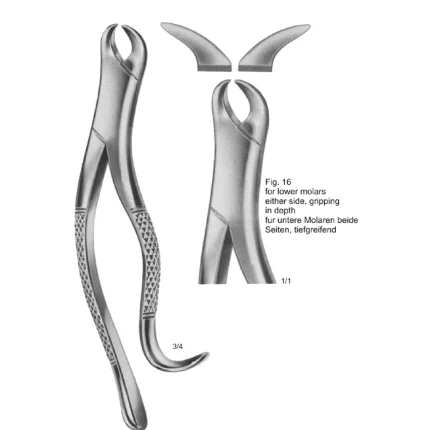
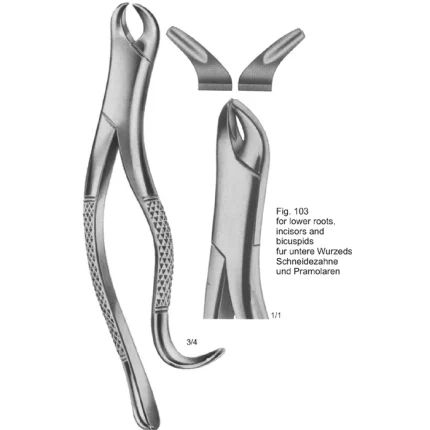
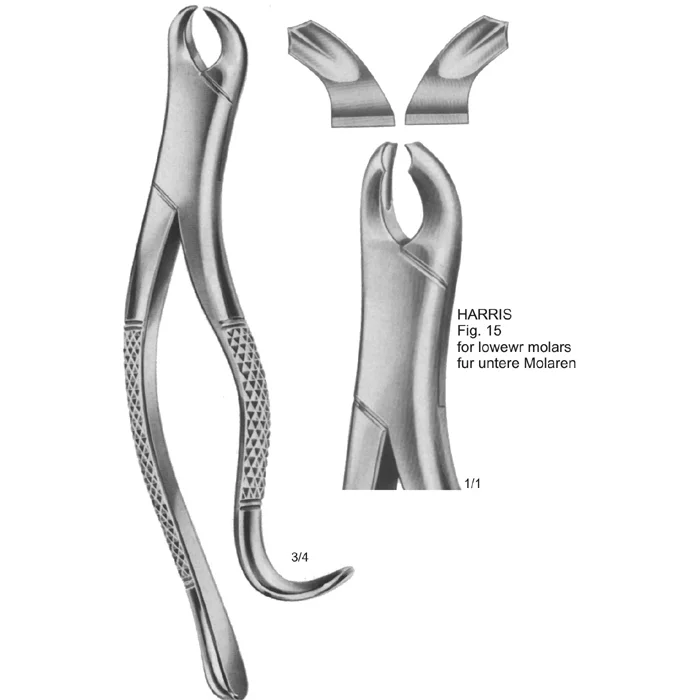
Harris Tooth Extracting Forceps
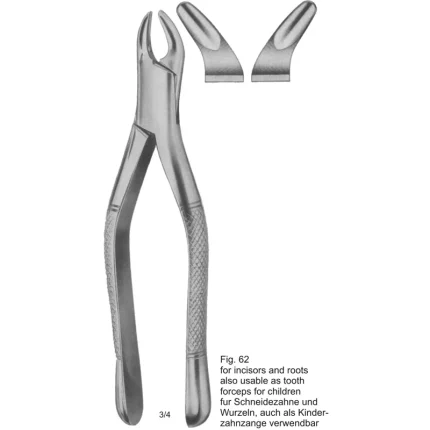
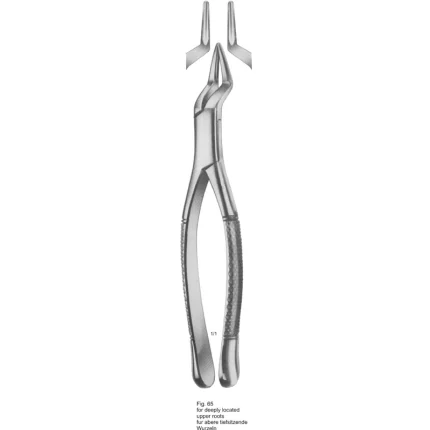
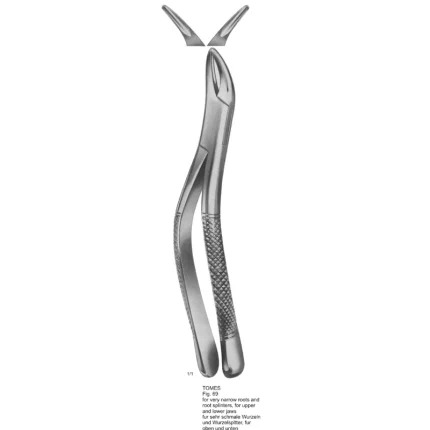
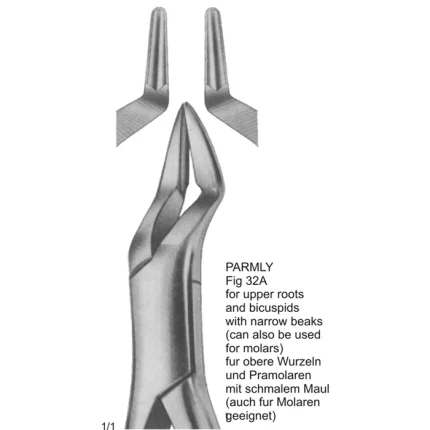
The ASI-2165 Harris Tooth Extracting Forceps is a precision-engineered dental instrument built for clinicians who need dependable control during routine and challenging extractions. Manufactured by Aero Surgical Instruments in Sialkot, Pakistan, this forceps is machined from premium German stainless steel, a material prized in the surgical instrument trade for its combination of hardness, flexibility resistance, and corrosion protection. That steel composition gives the beak tips the rigidity needed to grip a tooth firmly and apply controlled rotational force without flexing or losing alignment mid-procedure.
Following the American Pattern design tradition, the ASI-2165 carries a beak profile shaped to seat naturally against the crown and root contours it’s intended for, helping the working ends lock onto tooth structure rather than skate across smooth enamel. That anatomical fit matters clinically: a forceps that grips securely on the first attempt reduces the number of repositioning movements a practitioner needs, which in turn shortens chair time and lessens strain on the surrounding periodontal ligament and alveolar bone.
The exterior of the instrument is finished with a dull, matte surface treatment rather than a high-polish shine. In a clinical setting under bright overhead operatory lighting, a mirror-like finish can throw distracting glare back at the operator’s eyes at exactly the moment fine visual judgment matters most. The matte finish is designed to cut that glare down, supporting clearer sightlines into the oral cavity during delicate maneuvers.
Handle ergonomics get equal attention. The gripping surface is knurled with a textured pattern intended to stay secure in the hand even when gloves are damp with saliva or irrigation fluid — a common point of failure with smooth-handled instruments. Combined with a balanced weight distribution along the shaft, this is meant to reduce hand and wrist fatigue across a full day of procedures while preserving the tactile feedback clinicians rely on to judge how much force a root is tolerating.
Because dental instruments cycle through sterilization constantly, durability under repeated processing is a core design consideration. The stainless steel body is built to tolerate steam autoclave cycles, ultrasonic cleaning baths, and standard chemical disinfectants without pitting, discoloration, or loosening at the hinge joint. The hinge itself is fitted for smooth, low-play movement, so the mechanical action stays consistent use after use rather than developing wobble over time.
The ASI-2165 is sized to fit inside standard dental sterilization cassettes and tray systems, which makes it straightforward to slot into an existing instrument set without special accommodations. Every unit reportedly goes through manual inspection before packaging as part of the manufacturer’s quality process.
Overall, this forceps is positioned as a workhorse extraction tool for general and oral surgery practices that want a German-steel American Pattern instrument with practical, day-to-day usability features — secure grip, low-glare finish, sterilization resilience, and anatomically informed beak geometry — rather than one built around any single specialty use case.
Frequently Asked Questions:
- What is the ASI-2165 forceps made from? It’s machined from German-grade stainless steel chosen for strength and corrosion resistance.
- What design pattern does it follow? It follows the American Pattern tradition common in U.S. and internationally trained dental practice.
- Who manufactures this instrument? Aero Surgical Instruments, based in Sialkot, Pakistan.
- What kind of surface finish does it have? A dull, non-reflective matte finish rather than a polished chrome shine.
- Why does the matte finish matter clinically? It cuts down glare from operatory lighting, helping preserve visual precision during procedures.
- Can it go through a steam autoclave? Yes, the steel is built to withstand repeated high-heat autoclave cycles without warping.
- Is it safe for ultrasonic cleaners? Yes, it can be run through ultrasonic baths to clear debris from the hinge area.
- Will chemical disinfectants damage the finish? No, the steel’s chromium content resists pitting from standard disinfectant solutions.
- What does the handle texture look like? A knurled pattern designed to stay grippy even with wet or gloved hands.
- Does the design help reduce hand fatigue? The balanced weight and ergonomic handle are meant to ease wrist strain over long procedures.
- How does the beak shape aid extraction? It’s contoured to match tooth anatomy, helping the forceps grip securely rather than slip.
- Does it fit standard sterilization trays? Yes, its dimensions are sized to fit common dental cassette and tray systems.
- Is this instrument suited to pediatric patients? No, it’s dimensioned for adult extractions; pediatric cases call for smaller pattern forceps.
- How should the hinge be maintained? Light surgical-grade lubrication after cleaning helps keep hinge action smooth over time.
- What should staff check before each use? Hinge movement, beak alignment, and overall structural integrity should be inspected pre-procedure.
- Does the beak design help protect surrounding tissue? A close anatomical fit is intended to reduce slippage that could nick soft tissue.
- Is quality checked before shipping? The manufacturer describes a manual inspection step for each unit prior to packaging.
- What’s the product’s reference code? ASI-2165, used for ordering and inventory tracking.
- Is this a single-use or reusable instrument? It’s a reusable surgical-grade instrument designed for repeated sterilization cycles.
- What practice settings is it suited for? General dentistry and oral surgery practices doing routine to moderately complex extractions.