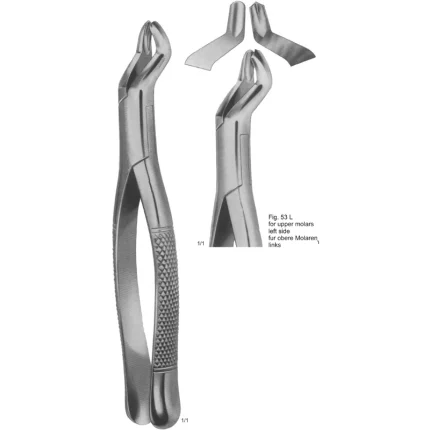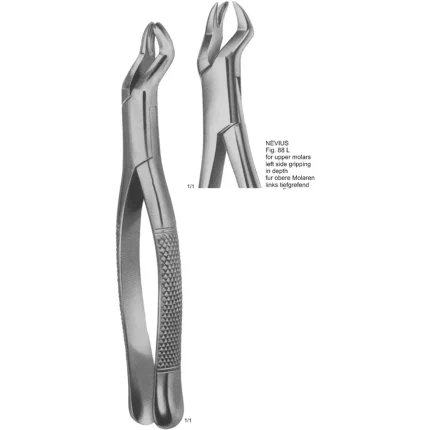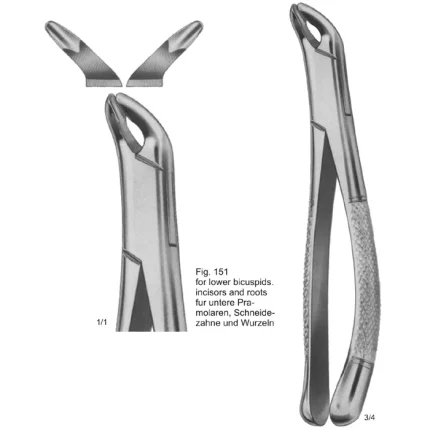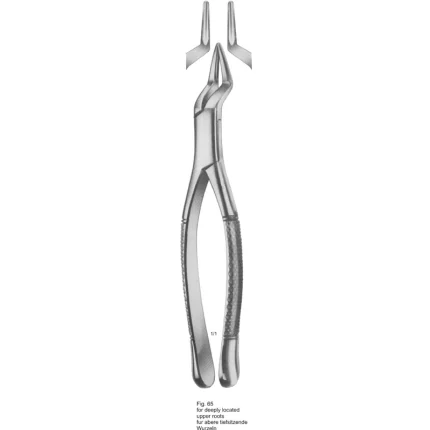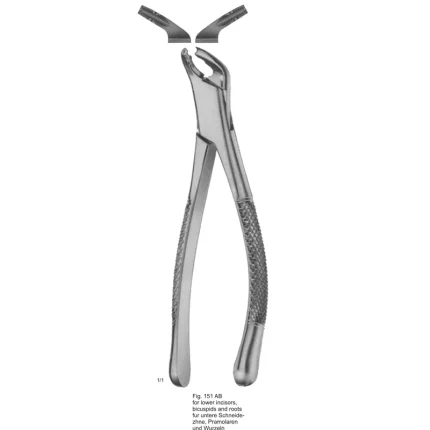
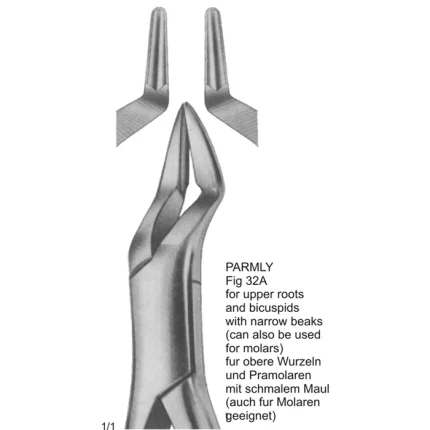
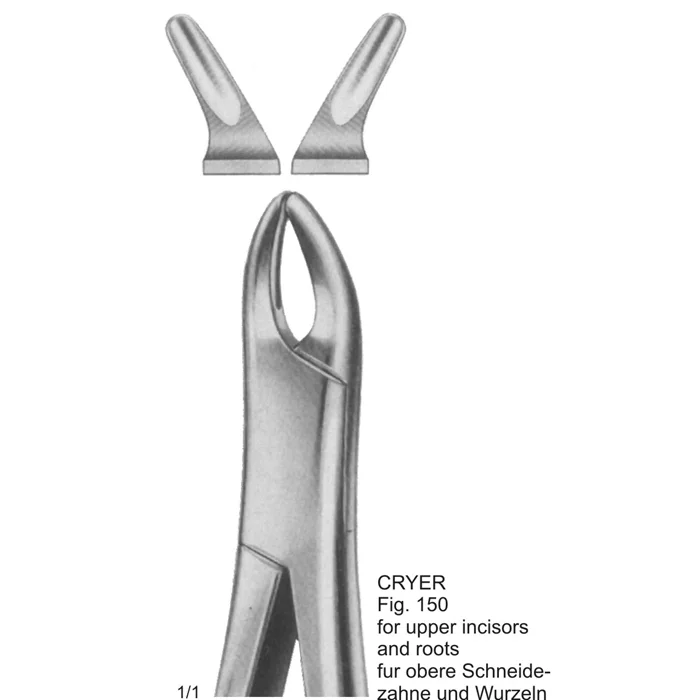
Cryer Tooth Extracting Forceps (American Pattern)
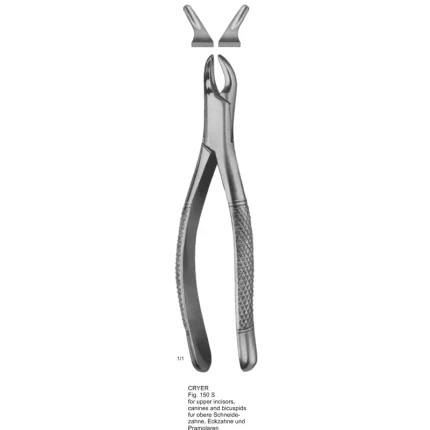
The Cryer Tooth Extracting Forceps Fig. 150 is a specialized dental instrument. It is designed specifically for extracting upper incisors and roots. The finely contoured beaks offer a firm grip on narrow crowns. This design helps dental professionals maintain control during delicate extractions.
The Cryer Tooth Extracting Forceps Fig. 150 (American Pattern) is an essential surgical tool. It is engineered specifically for extracting upper incisors, anterior teeth, and difficult root fragments. The precision-contoured beaks deliver a secure, firm grip on narrow crowns and roots. This design ensures maximum surgical control while significantly minimizing trauma to surrounding soft tissues.
Crafted from high-grade German stainless steel, this tool ensures durability and strength. The dull and matte finish minimizes glare under bright operating lights. Ergonomic handles reduce hand fatigue during long surgical procedures. This instrument is ideal for oral surgeons and general dentists. Manufactured by Aero surgical Instruments in Sialkot, Pakistan, quality is guaranteed. The precise build ensures consistent performance in every clinical setting. It provides maximum leverage while minimizing damage to surrounding tissues. Upgrade your dental surgical kit with this reliable American Pattern forceps.
It supports full autoclave sterilization, making it a safe, long-lasting investment for dental clinics. This versatile tool provides the high leverage needed by both general dentists and specialized oral surgeons. Its smooth mechanical joint allows fluid opening and closing without friction or stiffness.
Dentists can confidently execute rotational and anatomical traction movements without structural slippage. Every unit undergoes strict quality control checks to meet international medical device benchmarks. Adding this reliable forceps to your surgical tray elevates daily procedural efficiency and clinical safety.
Frequently Asked Questions (FAQs):
-
What is the primary function of the Cryer Tooth Extracting Forceps Fig. 150?It is primarily used to extract upper incisors and root fragments safely.
-
What pattern is this forceps designed after?It follows the American Pattern design standards.
-
What material is used to make this instrument?It is constructed from high-grade German stainless steel.
-
What type of finish does this forceps feature?It has a non-reflective dull and matte finish to reduce light glare.
-
Who manufactures the ASI-2184 forceps?It is manufactured by Aero surgical Instruments.
-
Where is this dental instrument made?It is made in Sialkot, Pakistan.
-
How do the beaks assist in extraction procedures?The contoured beaks provide an exceptional grip on narrow crowns.
-
Is this forceps suitable for general dentists?Yes, it benefits both general dentists and specialized oral surgeons.
-
Can this tool handle broken root extractions?Yes, its beak design allows for effective retention of root fragments.
-
How does the handle design help the practitioner?The ergonomic shape reduces hand strain and improves tactile feedback.
-
Why is German stainless steel beneficial for surgical tools?It offers enhanced durability, corrosion resistance, and longevity.
-
What product SKU or code identifies this item?The specific item code is ASI-2184.
-
Is this forceps designed for pediatric use?No, it is intended for adult upper anterior tooth extractions.
-
How does the matte surface help during surgery?It prevents bright operating room lights from reflecting into the surgeon’s eyes.
-
Does the design help prevent tissue trauma?Yes, the precise beak placement reduces injury to adjacent soft tissues.
-
Can this instrument be autoclaved?Yes, high-grade stainless steel allows standard heat and pressure sterilization.
-
What dental category does this product belong to?It falls under Tooth Extracting Forceps (American Pattern).
-
Is the grip slip-resistant during procedures?Yes, the textured handles help prevent slipping when operating with wet gloves.
-
What teeth are targeted by the Fig. 150 designation?The Fig. 150 pattern targets maxillary anterior teeth and roots.
-
Is this forceps suitable for heavy dental leverage?Yes, the solid construction supports controlled force application.