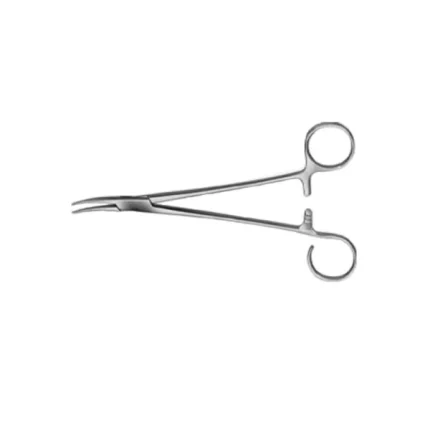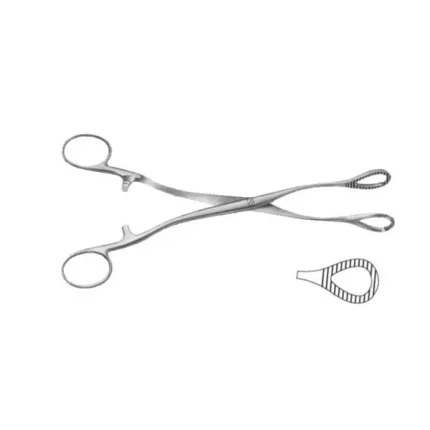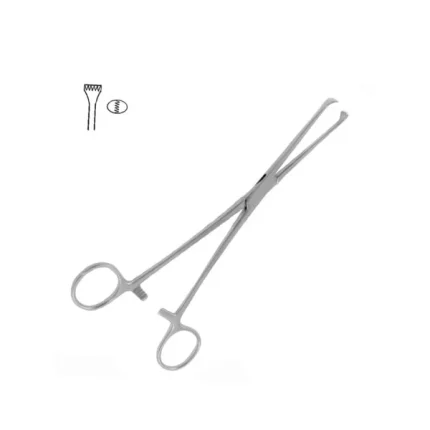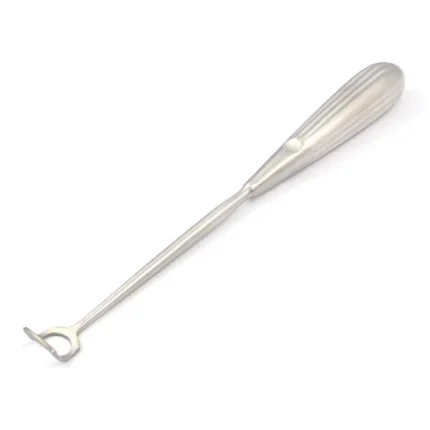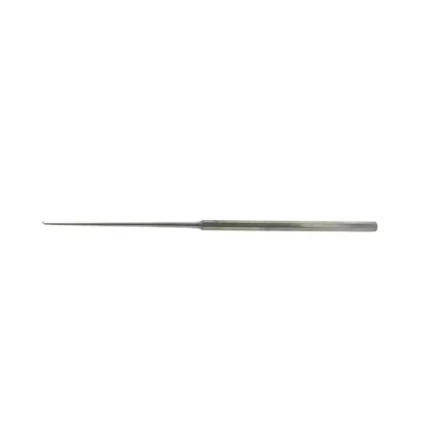
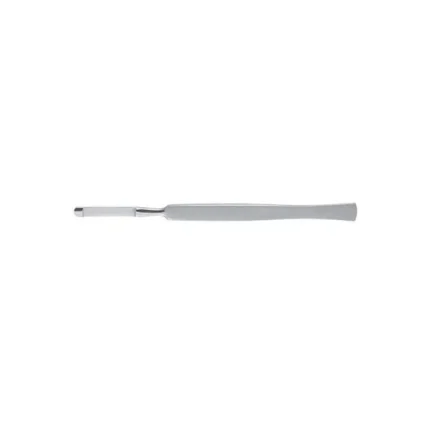

House Knife
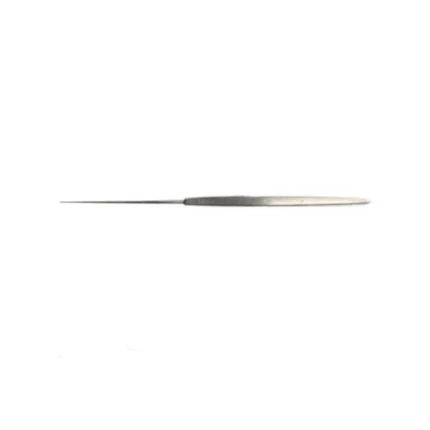
The ASI-8232 House Knife is a high-precision ENT surgical instrument engineered specifically for delicate middle ear procedures and otologic surgeries. Manufactured by Aero surgical Instruments in Sialkot, Pakistan, this knife features premium German stainless steel, a non-reflective matte finish, and an ergonomic grip designed for superior tactile control during tympanoplasty, stapedectomy, and myringotomy procedures.
The House Knife (ASI-8232) is designed for critical ENT procedures. It features a finely honed cutting edge crafted from surgical-grade German stainless steel. This ensures long-lasting sharpness and consistent blade integrity. The instrument features a balanced shaft with an anti-glare dull matte finish. This finish eliminates light reflections under operating room illuminators and microscope LEDs. Its ergonomic handle delivers maximum control during micro-incisions. Surgeons gain enhanced feedback while operating on delicate middle ear structures.
This specialized otologic knife is ideal for flap elevation and precision incisions. It is routinely used in tympanoplasty, stapedectomy, and acoustic neuroma surgeries. The streamlined shaft profile offers unobstructed visual clarity within narrow ear canals. German stainless steel construction provides high tensile strength and rust resistance. It withstands repeated autoclaving without loss of performance or structural damage. Manufactured in Sialkot, Pakistan, this tool adheres to international quality standards. It offers high performance and cost-effective dependability for ENT departments worldwide.
Frequently Asked Questions (FAQs):
-
What is the primary surgical application of the ASI-8232 House Knife?
It is designed for delicate ENT operations, including tympanoplasty, stapedectomy, and myringotomy.
-
What material is used to construct the ASI-8232 House Knife?
It is manufactured using high-grade German stainless steel.
-
What surface finish is applied to the instrument body?
It features a dull, matte anti-glare finish.
-
Why is a matte finish important for ENT instruments?
It prevents harsh light reflections under microscopic lighting and surgical headlamps.
-
Who is the manufacturer of the ASI-8232 House Knife?
It is manufactured by Aerosurgical Instruments in Sialkot, Pakistan.
-
What is the product SKU or reference code for ordering?
The item reference number is ASI-8232.
-
Is this knife reusable or single-use?
It is a fully reusable instrument designed for standard sterilization workflows.
-
How should the House Knife be sterilized between procedures?
It is compatible with standard steam autoclave and chemical sterilization processes.
-
Does the knife resist corrosion during repeated autoclaving?
Yes, the high-quality German steel formulation offers high corrosion resistance.
-
How does the handle design assist during microsurgery?
The ergonomic handle provides control and reduces hand fatigue during long procedures.
-
Can this instrument be used for tympanomeatal flap elevation?
Yes, its thin blade profile makes it suitable for precise flap elevation.
-
Is the blade edge specifically sharp for micro-incisions?
Yes, the edge is precision-honed for clean, low-trauma incisions.
-
How does the shaft design improve surgical visibility?
The slim shaft ensures minimal obstruction of the surgical field under microscopic view.
-
What country is this product manufactured in?
It is produced in Pakistan by specialist instrument craftsmen in Sialkot.
-
What medical discipline utilizes the ASI-8232 instrument?
It is primarily used in otolaryngology (ENT) and otologic microsurgery.
-
How does German steel compare to standard stainless steel?
German steel offers superior hardness, edge retention, and resistance to pitting.
-
Is the ASI-8232 suitable for pediatric ENT procedures?
Yes, its fine tip profile allows safe use within narrower adult and pediatric ear canals.
-
Does the knife body feature slip-resistant texture?
Yes, the handle includes textured tactile elements to maintain grip when wearing wet gloves.
-
Can this knife be used in neurotology cases?
Yes, it is often employed in procedures like acoustic neuroma excision for delicate soft-tissue dissection.
-
How should the knife edge be protected during storage?
It should be stored in an instrument tray with protective tip guards to prevent physical edge damage.